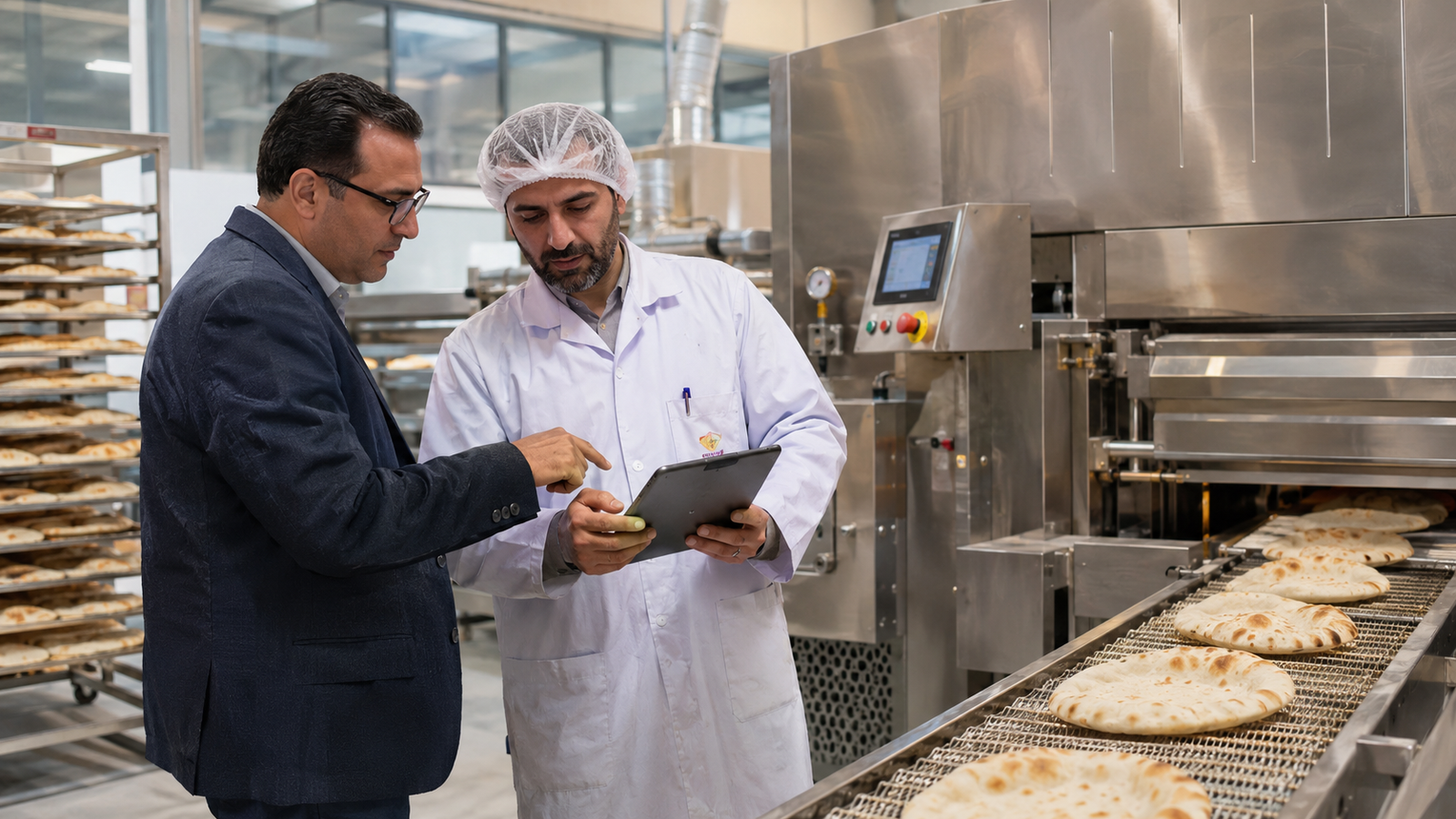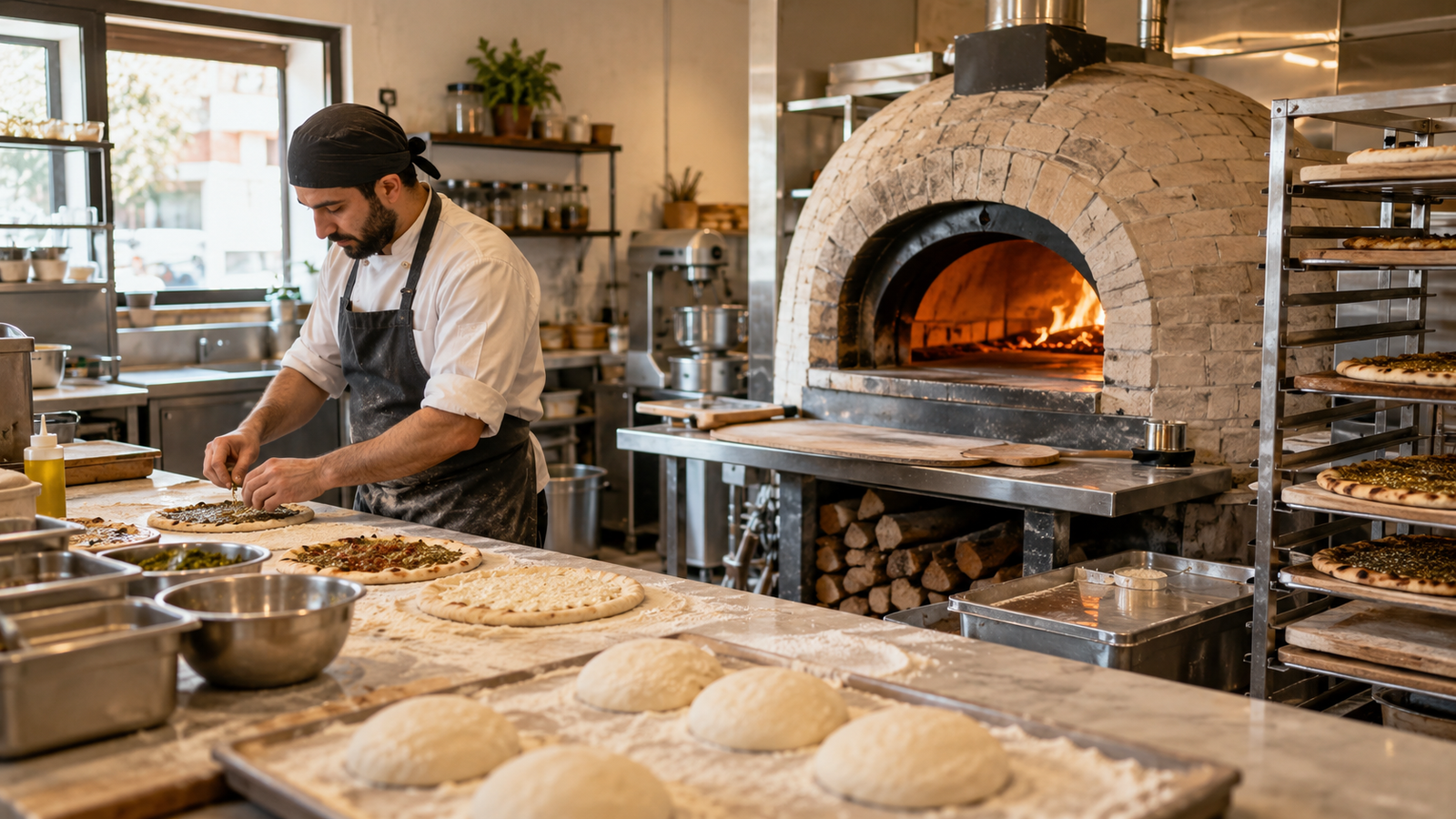
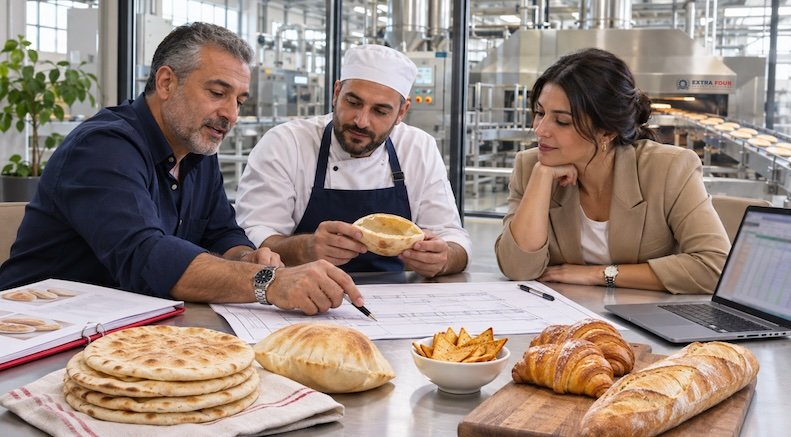
A bakery can produce excellent bread and still lose money. The selling price may leave too little margin, the production line may exceed realistic demand, or quality may change whenever a key baker is absent. These problems connect the recipe, the equipment, and the way the business is managed.
EXTRA FOUR Bakery Solutions is introducing a dedicated bakery consultancy service to help investors plan new bakeries and help established operators improve their performance. Available as a separately priced service alongside our bakery machines and bread production lines, it brings together product development, equipment planning, staffing, costing, and commercial analysis.
Whether you are opening a small bakery, launching a wholesale bread business, or improving an industrial bakery, the objective is to understand what you should produce, how the operation should work, and what the numbers must support.
What does a bakery consultancy service cover
Bakery consultancy connects the technical requirements of producing baked goods with the commercial requirements of running the business. It can include a bakery feasibility study, recipe development and standardization, production layout, machinery selection, labor planning, product costing, sales strategy, and operating controls.
For a new investor, this means testing the business plan before committing to premises, equipment, and recruitment. For an existing bakery, it means identifying why margins, quality, or output are falling short and defining a practical improvement plan.
The scope is agreed for each project. A neighborhood manakish shop needs a different study from a factory supplying packaged pita bread to supermarkets.
Planning a new bakery before purchasing equipment
Define the products and the customers
The first decisions concern what you will sell, who will buy it, and how it will reach them. A bakery selling fresh bread across a counter operates differently from one supplying restaurants, distributors, supermarkets, or several retail branches.
Our planning can assess the product range, local competition, market positioning, pack sizes, expected selling prices, and distribution requirements. Fresh and frozen concepts also require different production schedules, storage provisions, and logistics.
A useful bakery business plan connects expected demand to daily production. Forecasts should show conservative, expected, and growth scenarios, with their assumptions clearly stated. The maximum output of a machine is a production capability, not evidence that the market will purchase that quantity.
Understand the full cost of opening a bakery
Bakery startup costs extend beyond the machinery quotation. Depending on the project, the investment budget needs to account for premises and fit-out, production equipment, utilities and ventilation, storage, packaging, installation, training, and initial inventory.
Working capital also matters. Ingredients, wages, rent, and deliveries may need to be paid before wholesale customers settle their invoices. A forecast profit and loss statement, or P&L, should therefore be accompanied by a cash flow forecast.
The consultancy can examine operating expenses, break-even sales, budgets, and an estimated investment recovery period. These are scenario-based projections built from the project's prices, costs, and sales assumptions. They need to be revised when those assumptions change.
Select machinery around the production process
The right bakery equipment depends on the product specification and the production schedule. Loaf weight, diameter, thickness, dough characteristics, proofing time, baking method, and packaging format all influence the choice.
For bread production, the review may cover water dosing, mixing, dividing, rounding, resting or proofing, forming, baking, cooling, counting, stacking, and packing. Each stage needs sufficient capacity for the stages around it. A fast oven cannot compensate for a cooling conveyor or packaging station that cannot handle its output.
Our bakery machines and complete production lines can be assessed within this wider operating plan.
Equipment selection also considers cleaning, maintenance access, product changeovers, available utilities, and future expansion.
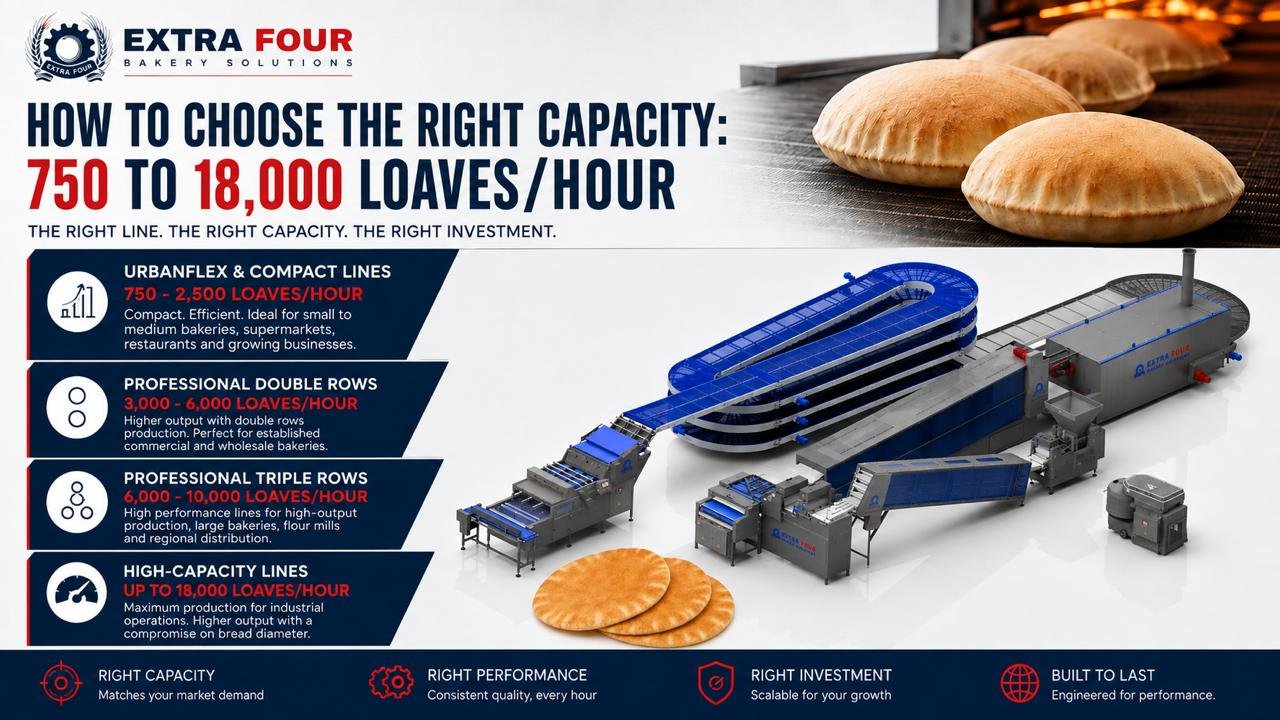
For a closer look at output planning, read our guide to choosing the right pita bread production line capacity.
Plan the layout and the workforce together
A bakery layout should support the movement of ingredients, people, trays, finished products, and waste. It also needs space for storage, cleaning, maintenance, and dispatch. Fitting the machines inside the building is only the beginning of that work.
Staffing should follow the actual tasks and shift pattern. Depending on the operation, these include dough preparation, line operation, baking, packing, sanitation, quality checks, maintenance, sales, delivery, and administration. Break coverage, days off, and peak periods also affect the headcount.
There is no reliable universal answer to how many employees a bakery needs. A labor plan should identify the positions required per shift, their responsibilities, training needs, and the tasks where automation would provide a measurable benefit.
Standardizing recipes and reducing dependence on individual employees
When a recipe exists only in one person's memory, the business becomes vulnerable to absence, turnover, and inconsistent training. Documented processes help skilled employees transfer their knowledge and give trained replacements a clear method to follow.
Recipe development and standardization can include product technical files covering:
- Ingredient specifications, flour characteristics, and approved substitutions.
- Formulas in weights and baker's percentages, with batch scaling instructions.
- Water addition, target dough temperature, mixing stages, and dough development checks.
- Portion weights, resting and proofing conditions, forming settings, and baking parameters.
- Cooling requirements, packaging specifications, and finished-product quality checks.
- Expected yield, acceptable tolerances, batch records, and corrective actions.
For Lebanese and pocket pita bread, consistency may depend on dough hydration, relaxation, sheeting uniformity, proofing, and the balance between baking time and heat. For pita chips, the review extends to cut size, frying or baking conditions, seasoning application, cooling, and pack weight.
Water dosers and dough mixers support repeatable preparation, while planetary mixers serve products such as batters, creams, and fillings. Their settings still need to be matched to the recipe and validated through trials.
Training and standard operating procedures, or SOPs, help employees apply these files consistently. The goal is a bakery that retains its know-how and can maintain production through staff changes. Skilled baking and sound supervision remain essential.
Calculating the cost of bread and other baked goods
Product costing should connect the recipe to the quantity of acceptable product it actually produces. Dough losses, weight variation, rejected products, packaging waste, and customer returns can all affect the cost recovered through sales.
At batch level, a useful starting calculation is:
Ingredient cost per saleable pack = total ingredient cost of the batch ÷ saleable packs produced.
The broader costing model then accounts for packaging, production labor, utilities, cleaning, maintenance, and appropriate overhead allocations. Delivery costs, discounts, commissions, unsold stock, and returns also need to be reflected when assessing the profitability of a sales channel.
Full product cost and contribution margin answer different questions. Full cost supports pricing and profitability analysis. Contribution margin measures the selling price left after variable costs to cover fixed costs and, once those are covered, profit.
Contribution per pack = net selling price per pack − variable cost per pack.
Monthly break-even packs = monthly fixed costs ÷ contribution per pack.
The following simplified example uses fictional figures to illustrate the calculation. It is not a quotation, a bakery benchmark, or a forecast for a customer.
| Measure | Initial scenario | Higher variable costs |
|---|---|---|
| Net selling price per pack | USD 1.20 | USD 1.20 |
| Variable cost per pack sold | USD 0.80 | USD 0.90 |
| Contribution per pack | USD 0.40 | USD 0.30 |
| Monthly fixed costs | USD 12,000 | USD 12,000 |
| Monthly packs sold to break even | 30,000 | 40,000 |
A USD 0.10 increase in variable cost raises the break-even requirement by 10,000 packs per month in this example. Selling more helps only if the additional sales contribute enough after their associated costs.
For a bakery with several products, the analysis must reflect the sales mix and the contribution of each product. Costs must be classified consistently so fixed labor or overhead is not counted twice. Break-even sales also need to be considered alongside payment timing, financing obligations, and cash requirements.
Estimating energy and utility consumption
Bakery consumption planning should cover electricity, oven or fryer fuel, water, and any process-specific requirements such as refrigeration or compressed air. Estimates should account for warm-up, production, idle periods, cleaning, and the intended operating schedule.
Installed electrical power in kilowatts, or kW, is different from energy consumed in kilowatt-hours, or kWh.
An equipment rating alone cannot establish the bakery's monthly electricity bill. Fuel estimates likewise need the selected fuel, burner configuration, operating conditions, and local price.
Useful operating measures include kWh per kilogram of saleable product, fuel consumption per production batch, and total utility cost per pack. These help connect energy use to productive output and reveal the effect of low utilization, extended idle running, or avoidable losses.
Improving an existing bakery with weak margins or inconsistent quality
For an established bakery, the starting point is its actual performance. A review can compare sales and P&L records with recipes, ingredient usage, staffing, production output, utility bills, waste, and customer returns.
This helps identify whether the main problem is pricing, purchasing, product yield, labor allocation, downtime, quality variation, distribution costs, or insufficient demand. The action plan can then prioritize changes according to their likely effect, cost, and practicality.
Commercial work may include reviewing the product mix, market positioning, customer coverage, pricing structure, and sales channels. Expanding the range with existing machinery can be valuable where the new products fit the process, have realistic demand, and justify their production and distribution costs.
Operational work can include process troubleshooting, recipe correction, staff training, quality assurance, hygiene routines, and clearer responsibilities. Where shelf life or food safety needs validation, the plan should identify the required testing and qualified support for the product and market.
A weekly management dashboard can track measures such as sales by product and channel, contribution margin, yield, waste, returns, labor hours, downtime, utility consumption, and cash collection. An assigned owner and review schedule turn those figures into decisions.
Bakery products and production lines within our expertise
EXTRA FOUR's consultancy draws on our experience with bakery equipment, dough processing, and finished products. The following links connect the main product families to the relevant equipment on our website.
| Product family | Related EXTRA FOUR equipment |
|---|---|
| Thin Lebanese and Arabic pita bread, including white and whole-wheat varieties | Lebanese and pita bread production lines |
| Thick pocket pita and Greek-style flatbreads | Pocket pita and Greek bread production lines |
| Chapati, roti, flatbreads, and wraps | Chapati, flatbread and wraps production lines |
| Flour and corn tortillas | Tortilla production lines |
| Traditional saj and markouk bread | Saj bread production lines and saj ovens and accessories |
| Baguettes, batards, toast bread, rolls, burger buns, ciabatta, and other European-style breads | European bread and pastry production lines |
| Baked and fried pita chips and crisps | Pita chips production lines |
| Manakish, pizza, and savory bread pies | Manakish and pizza equipment |
| Kaak, breadsticks, and grissini | Kaak and breadsticks machines |
The consultancy scope can also be discussed for tannour bread, regional Indian and Filipino breads, bagels, crackers, sweet rings, croissants, pain au chocolat, Danish pastries, brioche, quiches, muffins, and cupcakes.
Each product requires its own recipe, process, and equipment review. Inclusion in a consultancy scope does not mean that every product can run on the same production line. See further examples in our bakery end-products gallery.
Packaging is part of the operating plan too. Our bread counting, stacking and packaging equipment can be considered alongside the required pack format, throughput, handling method, and staffing.
What the consultancy can deliver
The engagement begins by defining the business objective and the information available. A new project may need a feasibility study and production plan. An operating bakery may first need a focused diagnosis of losses, inconsistent quality, or a production bottleneck.
Depending on the agreed assignment, deliverables can include a feasibility report, equipment and layout recommendations, documented recipes and process specifications, product costing sheets, a staffing and training plan, sales assumptions, P&L and cash flow projections, and a dashboard for monitoring performance.
The proposal defines which documents, trials, training, implementation assistance, and follow-up are included. This makes the consultancy a clearly scoped professional service, priced separately from the machinery supply.
Common questions about bakery consultancy
Can I request consultancy without buying a new production line
Yes. The service is available separately and can address a new investment, an existing bakery, or a specific operating problem. An equipment purchase can be assessed when it supports the agreed project objectives.
Is the service suitable for small bakeries
Yes. Small bakeries, manakish shops, and growing wholesale businesses need cost control and consistent production just as industrial bakeries do. The scope should match the size and complexity of the operation.
Our guide to opening a small bakery or manakish shop explains some of the equipment decisions involved.
Can consultancy help if my bakery is busy but unprofitable
Yes. High sales can coexist with weak margins when pricing, waste, labor, returns, or distribution costs are poorly controlled. A review can identify where money is being lost and evaluate changes using the bakery's actual records.
How much does bakery consultancy cost
The fee depends on the work required, the number of products and production processes, the available data, and the level of implementation support. EXTRA FOUR prepares a separate proposal after reviewing the project brief.
Can a consultant guarantee bakery profits
No responsible consultant can guarantee profit. Demand, execution, input prices, and management decisions influence the result. The purpose of the service is to make those factors visible, test assumptions, and give the team practical methods for improving performance.
Discuss your bakery project with EXTRA FOUR
EXTRA FOUR is based in Lebanon and brings more than three decades of bakery engineering experience to projects serving different products and markets. This new consultancy service applies that practical perspective to the wider decisions that bakery owners face.
We believe no bakery should fail for lack of proper guidance. Our aim is to help owners understand their numbers, retain their production know-how, and build an operation they can manage with confidence.
To discuss an assignment, send us your country, product range, planned or current output, available premises and equipment, and the main questions you need answered. For an existing bakery, a summary of sales, costs, staffing, and recurring quality or production problems will help define the review.
Contact EXTRA FOUR to request a bakery consultancy proposal.